Membrane Filtration Technology
Best membrane filtration technology for waste water plants
Membrane filtration can significantly reduce chemical elements in industrial wastewater. This is a process that takes place at low temperatures for cleaning. These ecological membrane systems therefore allow not only the recovery of the water already used, but also its continuous reuse. This consequently leads to a limited waste of costs and energy in industrial treatments. Industrial activities in fact produce large volumes of waste water, but with the recovery and cleaning of water it is possible to avoid waste.
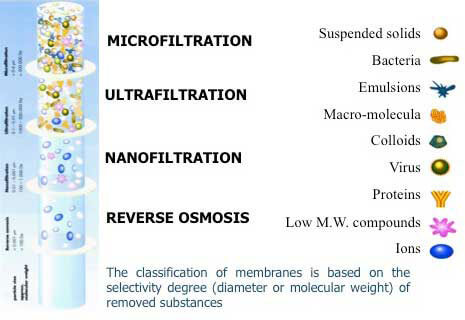
CIE mainly uses membrane filtration for water reuse as a technology applicable to the aluminum and steel fields. The membrane units for treatment plants in fact provide for the recovery of water through specific processes: microfiltration, ultrafiltration, nano filtration and reverse osmosis. Moreover, this last technology is able to remove even very small particles and for this is used in a lot of wastewater treatment plants. Membrane systems can therefore be combined with each other, in order to be useful also for other phases of the water recovery cycle.
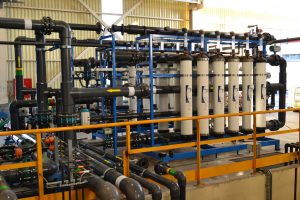
In fact, through the pressure movement of the membrane that separates the different filtration units, it carries out a real separation of the polluting waste from the water, preparing it for subsequent treatments. There are several industrial applications that can therefore benefit from membrane filtration, especially where a large consumption of water is required. Therefore, the use of direct wastewater treatment units through membrane filtration is essential to consistently and efficiently produce water with low effluent content.